
Sources for Previous Residents of Murray
Start with the source that matches the era. The recorder is strongest for transfers. County Archives is strongest for address-keyed tax and permit material. Printed city directories and reverse directories add household names. Census schedules add a household snapshot. Sanborn maps show structures and street form, not residents. Obituaries, cemetery entries, and probate can close a family trail after a person’s death.
| Source | Years | Where held | What it shows |
|---|---|---|---|
| Recorder deeds and indexes | Territorial era to current, cutoff not stated online | Salt Lake County Recorder and Data Services | Parties, dates, legal description |
| Tax appraisal cards | 1934-1987, later 1970s-1991 uploads | Salt Lake County Archives | Owner, house, footprint, changes |
| Permit cards | 1948-1969; permits about 1970-2019 | Archives and Murray | Owner, designer, contractor, cost |
| City directories | 1910 item and other runs to confirm | Marriott, Library, Museum | Households and address entries |
| Tax rolls and land titles | 1853 forward; land titles 1851-1895 | County Archives | Early owner and legal clues |
The time ranges are not a promise that every year is online. A missing item may require an appointment, a staff search, a book or plat, or a request to the current custodian.
Freeze a Murray Past-Resident Parcel
Search the Salt Lake County Assessor by exact address, owner, or parcel number. Write down the situs address, mailing address, parcel number, legal description, city field, and map location. The county’s main form uses address selection and the legacy screen separates frontage number, direction, street name or number, and type or direction. A parcel is the stable key when a mailing label or street name shifts.
Open the recorder public summary next. It can show current owner, property address, legal description, document count, document number, recording date, and document type. A current result may be at least 24 hours old, and the county warns that a title search may be required. Preserve the exact legal description before going backward.
The image below shows the County Archives house-history route. Its address-first rule is central to work on previous residents.
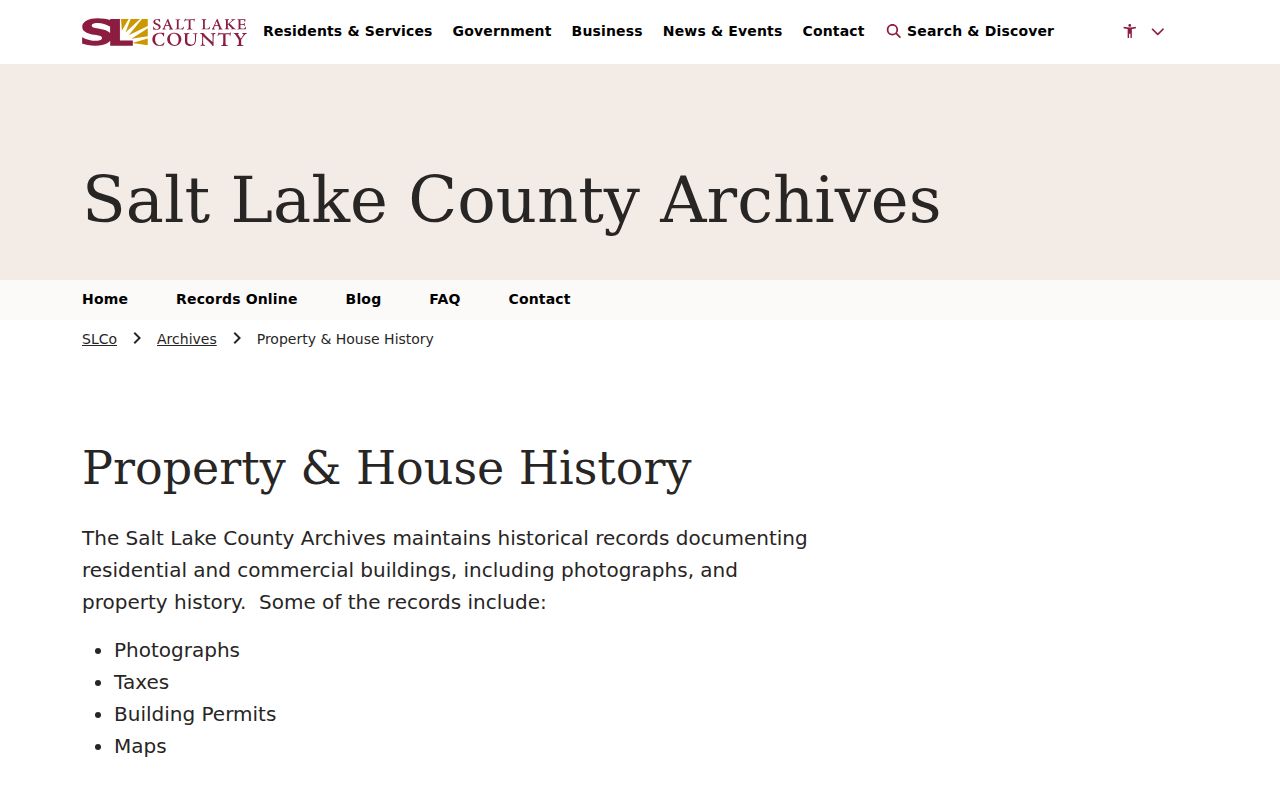
Use an address, not a person’s name, when requesting appraisal cards from the Archives.
Walk the Murray Deed Chain
Begin with the current owner and parcel. Find the latest purchase deed in the recorder index or Data Services. Read the grantor, grantee, recording date, instrument number, and legal description. Then search the seller as grantee. That earlier deed identifies the transfer before the current owner. Repeat the process while comparing the same lot, block, plat, or section description.
- Copy the current parcel and legal description from the assessor.
- Use the recorder summary to identify the latest document.
- Read grantor, grantee, date, document number, and legal description.
- Search the prior grantee as a grantee for the earlier purchase.
- Move to Archives or older deed books when the online layer ends.
- Grantor
- The party transferring an interest.
- Grantee
- The party receiving an interest.
- Chain of title
- The linked sequence of recorded transfers for one parcel.
- Legal description
- The lot, block, plat, section, or other land description.
Recorder Data Services advertises a $5, 24-hour login and paid data packages. Images, chain tools, and plats may carry separate charges. Confirm the current fee schedule before ordering. A deed connects parties to land. It does not prove which household occupied the property.
Murray Recorder Summaries and Their Limits
The public property search is a summary, not a full instrument library. It requires an address or parcel selection from an auto-populated list. It can display a document count, type, number, date, owner, address, and legal description. Images and fuller functions move into Data Services or a recorder request.
The recorder’s recording requirements explain why a deed may contain a grantee name and mailing address, legal description, signatures, and notarial acknowledgment. Those fields support title notice. They do not create a household directory. If an old scan is missing, ask the Recorder about the document number, book or page reference, or the county’s older record route.
Archives and Recorder records work together when the current index does not reach the needed year.
Murray Tax Cards Show House Changes
County Archives appraisal cards are one of the most useful house-history sources for Murray. Traditional cards can show owner, address, building class, year built, stories, additions, square feet, rooms, depreciation, garage, appraisal date, and a footprint drawing. The county’s historical material covers 1934 through 1987, with bulk years from the 1930s through the 1970s and continuing digitization for the 1970s through 1991.
The catch is important: the cards need the property address and cannot be searched by name. A card can show that a house gained a room, garage, or addition. It cannot by itself list every resident. Pair the card with a directory page, census household, newspaper, deed, or permit before assigning a person to the home.
Murray Permit Cards Date Building Work
Building-permit application cards from 1948 through 1969 can name an original owner, architect or designer, contractor, cost, and legal description. County permits cover approximately 1970 through 2019, but incorporated Murray may send a current request to the city. Murray’s Building Division has weekday hours from 7:30 a.m. to 5 p.m., with no permit processing after 4 p.m. No public searchable permit database was verified.
Request a permit, inspection, certificate of occupancy, or site plan through Murray GRAMA with the address, date range, and record type. The result dates a project or identifies a person who acted on the project. It does not show that the applicant lived at the address for the whole period.
Murray’s 1942 Sanborn Snapshot
The Library of Congress has a 1942 Sanborn item specifically identified as Murray, Salt Lake County, Utah. Sanborn fire-insurance maps show building footprints, uses, alleys, lots, and street configuration. They do not name residents. That makes them useful for testing whether a structure existed and how its shape changed, not for proving who lived there.
Compare the Murray Sanborn item with the current parcel map, a directory address, tax card, and permit. The map can explain why an old entry points to a store, rear building, or lot that no longer looks the same. The Library of Congress search guide explains how to find related Salt Lake City volume material.
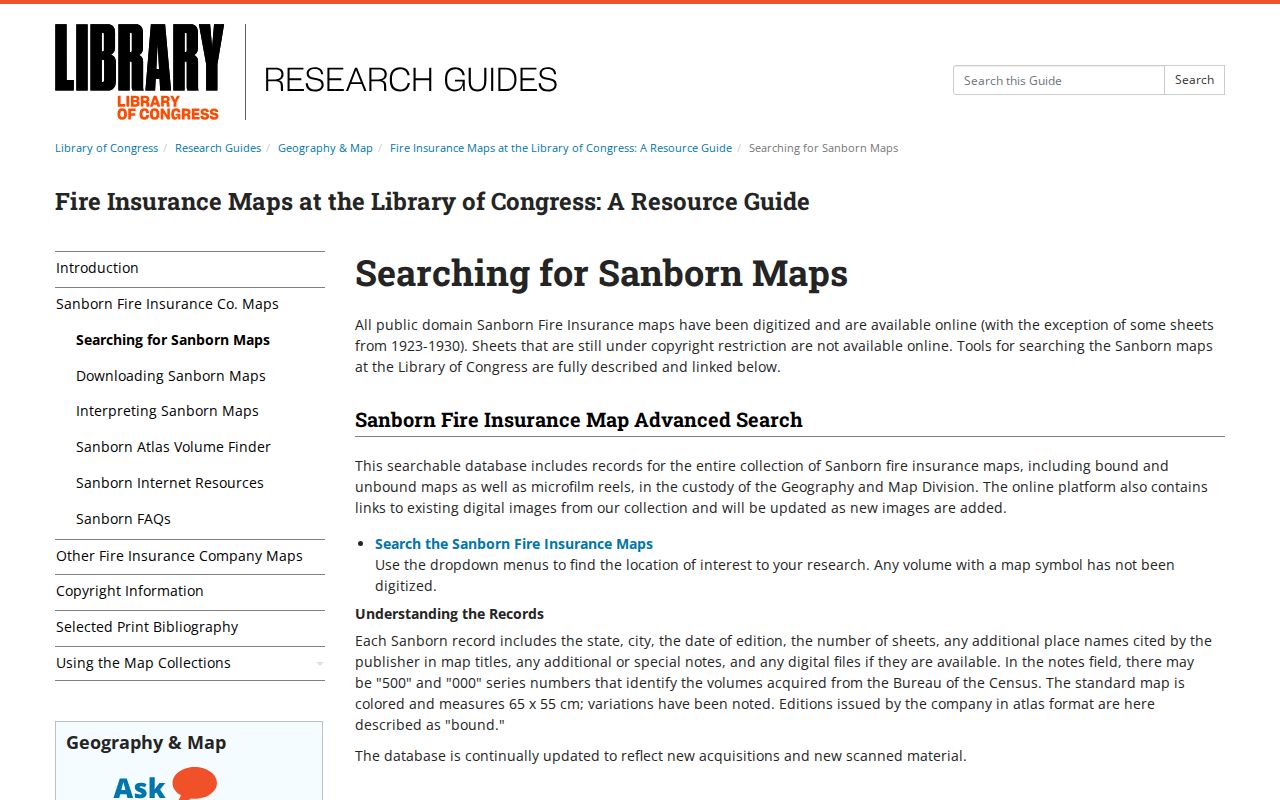
Use the map as structure evidence, then return to named records for people.
Murray Previous Residents Meet the Census
A city directory can name an occupant or household at a street address for one compiled year. The University of Utah Marriott Digital Library has a Utah City Directories Collection that includes a 1910 Polk Salt Lake volume naming Murray. The census gives a household snapshot for an enumeration date. Neither source covers every year.
For previous residents, choose a directory year, record the exact address and family marks, then compare the nearest census decade. Note moves, spelling changes, a spouse notation, and the reverse section. If a person disappears, test death, relocation, publication gap, and unlisted status with newspapers, cemetery records, deeds, or the Murray Museum. The full historical shelf is described in the Murray city directories guide.
Murray Previous Residents and Early Tax Rolls
Salt Lake County tax assessment rolls begin in 1853. Rolls from 1853 through 1858 were arranged by year, surname, and ward. From 1859 through 1892, the order was year, ward, and surname. In 1893, the arrangement moved toward legal description by plat and block. This shift explains why an early resident can vanish from a modern street search even when the land record survives.
County Archives also identifies the First County Ledger from 1852 through 1856 and land-title certificates from 1851 through 1895. The land-title name index is only partly searchable online, with surnames beginning with R specifically described as viewable and other indexed names available by request. Treat that partial digitization as a research lead, not a complete online index.
Murray Obituaries and Probate End the Trail
For a past Murray resident, an obituary can provide a death date, family, congregation, former address, or service detail. Utah’s Cemetery and Burials database supports name, death-year, cemetery, county, and city searches. The Murray Museum holds newspaper clippings, family biographies, yearbooks, scrapbooks, and oral histories. Those sources can connect a person to a place after a directory stops.
Probate cases in Xchange can identify a decedent, personal representative, heir role, filing date, and case history. Court attachments and private details may be restricted. Compare the case with a death record, deed, cemetery entry, and obituary. If the estate is older, ask the county Archives about historic court files or an appointment.
Murray Address Continuity Without Guessing
Murray’s name changed from South Cottonwood Post Office to Murray in 1883. The railroad, smelter, State Street, trolley routes, Jordan River, and Big Cottonwood Creek shaped the city’s address eras. Boundaries also shifted. Do not assume a current ZIP or street name describes the same record geography as an 1870 or 1910 source.
Use a chain of legal description, plat, tax roll, Sanborn map, directory, and current parcel. The county’s Archives house-history page is an address-based fallback, and its contact route is (385) 468-0820 by appointment. A careful previous-residents search states which bridge connects each old address to today’s parcel.
Murray Previous Residents and Lawful Use
A previous-residents search is appropriate for family history, a home’s recorded story, estate work, historic preservation, or checking a property record that affects you. Public files can still contain errors, protected data, or information about people who do not want their location shared. Safe at Home and at-risk voter rules can remove or shield address details.
Lawful personal use. Use the record chain to understand a Murray address, not to pursue a person. Do not use names, deeds, maps, or obituaries to stalk, harass, intimidate, or harm anyone. Ask the custodian about corrections or protected categories.